

Solid Gold vs Gold Plated vs Gold Filled vs Vermeil: How to Tell the Difference

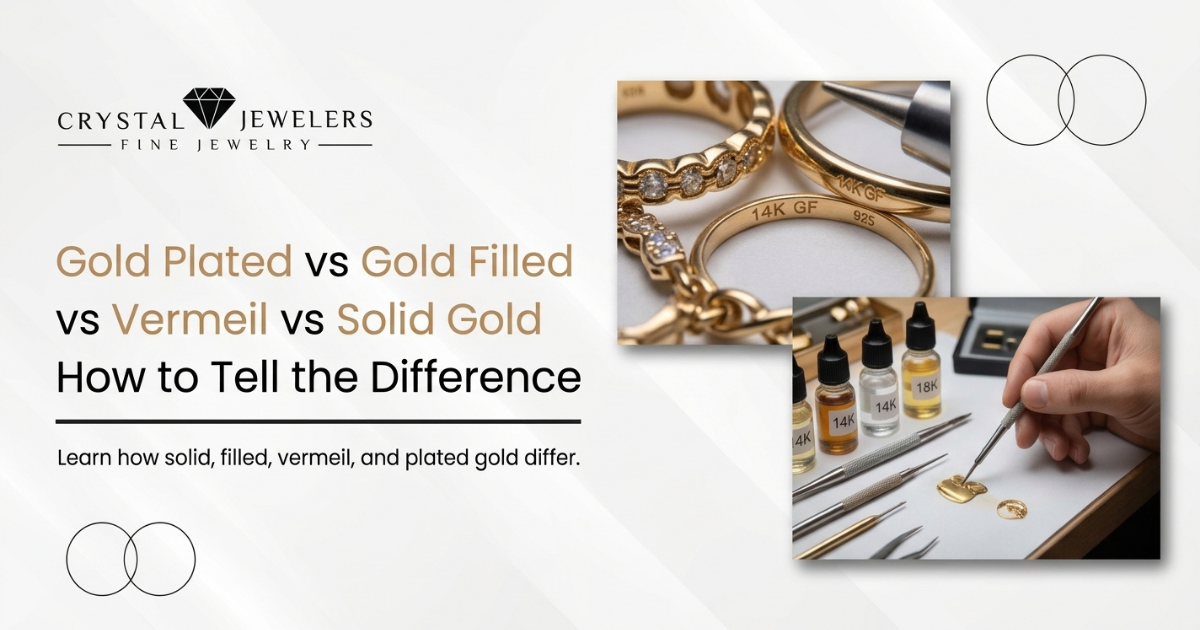
Solid gold is gold all the way through. Gold plated, gold filled, and gold vermeil are different. Each one is a thin layer of gold on top of another metal. The difference is how thick that layer is and what sits underneath.
Only solid gold is gold throughout. The others can look great, but the gold layer can wear off over time. Below, we explain each type in plain words and show you how to check your own jewelry.
Quick Answer: Gold Types Side by Side
| Type | What it is | Gold layer | Lasts | Price |
| Solid gold | Gold mixed with other metals, all the way through | It is the whole piece | Decades or more | Highest |
| Gold filled | Thick gold layer pressure-bonded to a base metal | At least 5 percent of the total weight | Years | Middle |
| Gold vermeil | Gold over sterling silver | Thicker than plating, often at least 2.5 microns | Years with care | Middle |
| Gold plated | Very thin gold over a cheaper metal | Very thin | Months to a few years | Lowest |
Prices and life spans depend on how you wear the piece and how well you care for it.
What Does “Solid Gold” Mean?
Pure gold is very soft. So jewelers mix it with other metals to make it stronger. That mix is called an alloy. When the whole piece is made of that alloy, it is called solid gold.
The number of karats tells you how much pure gold is in the mix. Here is the simple math:
- 10K gold is about 41.7 percent pure gold
- 14K gold is about 58.3 percent pure gold
- 18K gold is about 75 percent pure gold
- 24K gold is pure gold, which is very soft
Solid gold does not have a coating to wear off. It can be sized, fixed, and polished. It also keeps some value as metal. That is why many people choose it for rings, chains, and gifts they want to last.
Want to know why 14K is so popular? Read why 14K gold jewelry is ideal for daily wear.
What Is Gold Plated Jewelry?
Gold plated jewelry starts with a cheaper base metal, like brass or copper. A very thin layer of gold is then added on the outside. This is often done with an electric process.
The gold layer on plated jewelry is very thin. It can look bright and pretty on day one. But it can wear away, especially on parts that touch skin or other things, such as ring bands, clasps, and bracelet links.
Good for: trendy pieces, costume looks, and items you will not wear every day. Not great for: a ring you plan to wear daily or an heirloom.
There is nothing wrong with plated jewelry when it is priced fairly and labeled honestly. The problem starts when a plated piece is sold as if it were real gold.
What Is Gold Filled Jewelry?
Gold filled jewelry has a much thicker layer of gold than plated jewelry. A sheet of gold is bonded to a base metal with heat and pressure. In the United States, the gold layer must be a set share of the total weight, commonly at least 5 percent.
The name is confusing. Gold filled jewelry is not filled with gold. It is a base metal with a thick outer layer of gold.
Gold filled pieces are usually stamped with something like “1/20 14K GF.” That means one twentieth of the item’s weight is 14K gold.
Good for: everyday chains and earrings at a moderate price. Keep in mind: the layer can still wear down over many years, and it cannot be treated like solid gold.
What Is Gold Vermeil?
Vermeil is said “ver-may.” It is gold plating over sterling silver. That is the key point. Plain plated jewelry often sits on brass or copper. True vermeil sits on silver.
To be called vermeil, the gold layer must also be thicker than a standard plating. A common rule is at least 2.5 microns. A micron is very small. It is about one thousandth of a millimeter.
Vermeil is a step up from plated jewelry. But it is still a coating. If the gold rubs off, the silver underneath can show, and silver can tarnish.
Good for: budget-friendly fine jewelry with a rich look. Keep in mind: it is not solid gold, and it needs gentle care.
Does Gold Plated Jewelry Turn Your Skin Green?
Sometimes, yes. Green marks happen when the base metal, like copper, reacts with sweat, lotion, or water. The gold layer is thin, so the base metal can touch your skin once the gold wears away.
Solid gold is much less likely to cause this problem. If you have sensitive skin, see our guide to hypoallergenic jewelry for sensitive skin.
How to Tell What Kind of Gold You Have
Here are simple ways to check your jewelry. None of these is perfect, so use them as clues.
Step 1: Look for a stamp
Turn the piece over. Look at the clasp, the inside of a ring, or a small tag near the clasp. Common stamps include:
- 10K, 14K, 18K, 585, 750: these usually mean solid gold. The numbers 585 and 750 stand for purity in parts per thousand.
- GF or 1/20: gold filled
- GP, GEP, HGE, or “gold plated”: gold plated
- Vermeil, 925, or “sterling” with a gold color: likely vermeil
Stamps are not always honest, and some real gold has no stamp. Older pieces can wear smooth. So keep going.
Step 2: Check for worn spots
Look at edges and high-touch spots. Do you see a different color coming through? A silver, pink, or gray patch can mean the gold layer is wearing off. Solid gold stays the same color all the way through.
Step 3: Use a magnet
Gold is not magnetic. Hold a strong magnet close to the piece. If it sticks, the piece has a magnetic base metal. If it does not stick, that does not prove it is gold, because some base metals are not magnetic either.
Step 4: Notice the weight and price
Solid gold feels heavy for its size. Also think about the price. Real gold costs a lot right now. If a “gold” chain seems very cheap, it is likely plated or filled.
Step 5: Ask a jeweler
The best test is a quick visit to a jeweler. A trained jeweler can use tools to test the metal safely. Please skip home acid tests unless a pro does them, because they can damage a piece.
Which Type Should You Buy?
Use this guide to match the metal to how you will use it.
| If you want… | Consider |
| A ring you will wear every day | Solid gold |
| A gift or heirloom | Solid gold |
| A wedding or engagement band | Solid gold or platinum |
| A trendy piece for a season | Gold plated |
| A budget-friendly everyday chain | Gold filled or vermeil |
| A gold look on a smaller budget | Vermeil or gold filled |
If you are shopping for chains, see our guide to gold necklaces and chains or browse necklaces and chains. If you want a men’s ring, our marriage ring for him guide can help.
How Much More Does Solid Gold Cost?
Solid gold costs more up front because you are paying for real gold. But it can cost less over the long run for pieces you wear often. A plated ring may need to be replaced again and again. A solid gold ring can last for decades.
Solid gold also holds some value as metal. If you ever want to sell old pieces, see cash for gold in Greensboro. Plated pieces usually have almost no metal value.
Can You Fix or Resize These Types?
- Solid gold: yes, in most cases. It can be sized, soldered, and polished.
- Gold filled: sometimes. It depends on the piece.
- Vermeil: often hard, because heat and polish can remove the gold layer.
- Gold plated: usually hard. Repair can strip the plating.
If you need help with a repair, see our jewelry and watch repair page.
How to Care for Each Type
Good care helps every type last longer.
For all gold jewelry:
- Take it off before swimming, cleaning, or heavy work
- Put on lotion and perfume first, then jewelry
- Wipe it with a soft cloth after wearing
For plated, filled, and vermeil:
- Avoid water, sweat, and harsh cleaners
- Skip rough cloths and brushes
- Store each piece by itself in a soft pouch
For solid gold:
- Clean gently with mild soap and warm water
- Use a soft brush for tight spots
- Have it checked by a jeweler now and then
For more tips, read how to store jewelry at home to prevent tarnish and damage and our necklace cleaning tips.
How Sellers Can Be Confusing
Some words on a product page sound better than they are. Watch for these:
- “Gold tone” or “gold color”: this usually means no real gold at all
- “Gold finish”: this often means a thin coating
- “Gold layered”: this is not the same as gold filled
- “Genuine gold” with no karat: ask what karat it is
- “Real gold plating”: it is still plated
A trusted seller will tell you the karat, the base metal, and the type of coating. If a seller cannot answer, that is a warning sign. For help finding a good store, see how to find a trusted jeweler in Greensboro.
Shopping for Gold in Greensboro and the Triad
Crystal Jewelers is a family-owned jewelry store in Greensboro, NC. Customers come from High Point, Winston-Salem, Burlington, and Kernersville to see gold jewelry in person. Holding a piece in your hand is the easiest way to judge the weight, color, and feel. You can browse our rings and bracelets, or learn more about us. If you want a piece made just for you, see our personalized jewelry page.
Frequently Asked Questions
Gold plated has a very thin layer of gold. Gold filled has a much thicker layer, bonded with heat and pressure. Gold filled usually lasts longer.
It has real gold on the outside, but it is not solid gold. Vermeil is a thicker layer of gold over sterling silver.
Yes, in most cases. It has more gold and holds up longer. Neither one is solid gold.
Look for a karat stamp like 10K, 14K, or 18K. Check for worn spots where another color shows. For the most reliable answer, ask a jeweler to test it.
It can. When the thin gold layer wears away, the base metal can react with sweat or lotion and leave a green mark.
Yes. 14K gold is solid gold that is about 58.3 percent pure gold, mixed with other metals for strength.
The Bottom Line
Only solid gold is gold all the way through. Gold filled, vermeil, and plated pieces all have a layer of gold on top of another metal. The thicker the layer, the longer it usually lasts.
Pick the type that fits how you will wear the piece and what you want to spend. If you are not sure what you own or what to buy, visit Crystal Jewelers in Greensboro. We are happy to look at it with you.