



Hypoallergenic Jewelry for Sensitive Skin: A Complete Buyer’s Guide

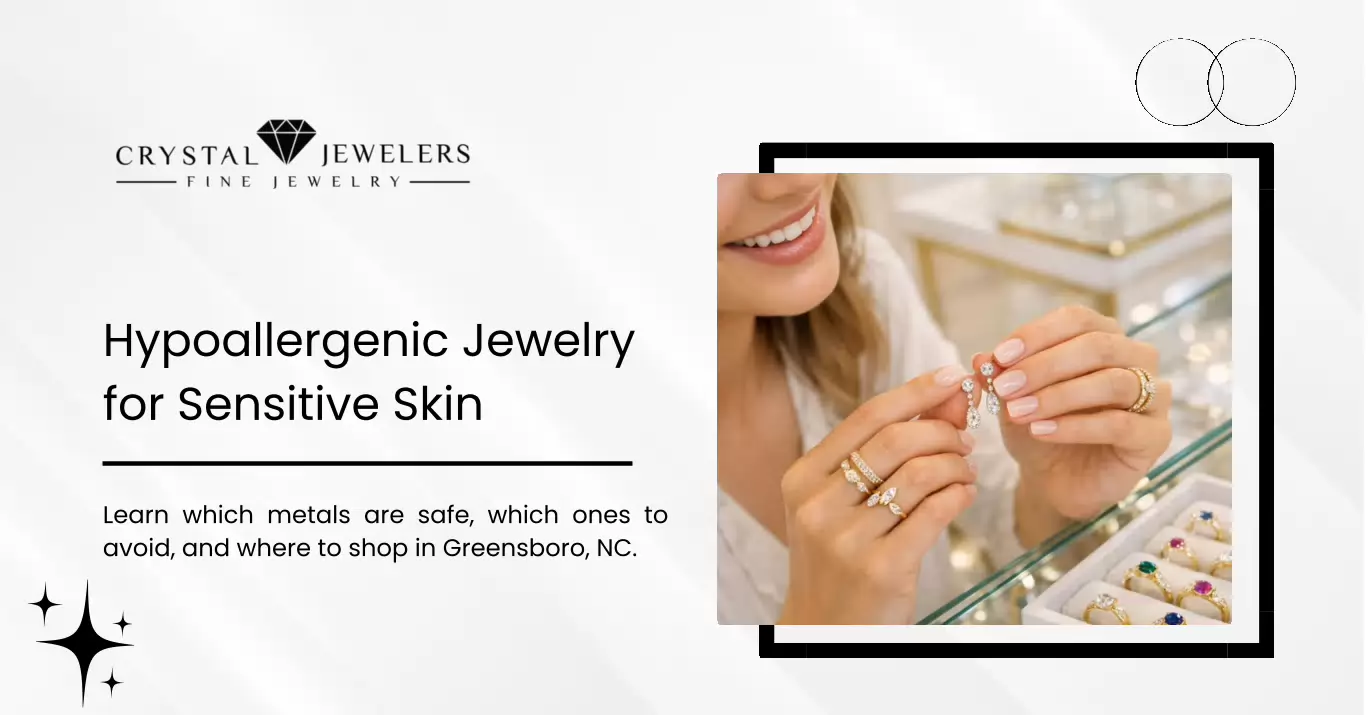
Hypoallergenic jewelry for sensitive skin can be the difference between a piece you wear for years and one that ends up in a drawer after a single itchy afternoon. If you have ever taken off a ring or a pair of earrings because your skin turned red, sore, or itchy, you already know the problem. The good news is that this is common, it is fixable, and you do not have to give up jewelry to solve it.
In this guide, we will walk through why skin reacts to certain metals, which metals are safe, which ones to avoid, and how to shop smart so you never have to deal with a rash again. We will also share where to find good options if you live in or near Greensboro, North Carolina.
Why Your Skin Reacts to Certain Metals?
Most jewelry reactions are not a true allergy to gold or silver. They are a reaction to nickel. Nickel is cheap, so it gets mixed into many metal alloys to add bulk and lower the cost. It hides in earring posts, clasps, and low-quality plated pieces. When nickel touches your skin for long periods, especially in a warm, damp spot like an earlobe, your immune system can start to treat it like a threat. This shows up as redness, itching, small bumps, or a rash right where the metal sits.
Here is something important to know: you can wear a piece for months or even years with no problem, then suddenly develop a reaction. Sensitivity often builds up slowly. Your body gets exposed to a small amount of nickel again and again, and at some point, your immune system decides it has had enough and starts fighting back every time that metal touches your skin.
Doctors call this contact dermatitis, and it can show up as dryness, small blisters, or a rash that spreads slightly past the exact spot where the metal sat. Once your body reacts to nickel, it tends to stay that way. That is why picking the right metal from the start matters so much, rather than waiting to see what happens after the fact.
What Makes Jewelry Truly Hypoallergenic?
“Hypoallergenic” is not a word with a strict legal definition in the jewelry industry. Nobody has to prove a claim before printing it on a tag. That means the word alone does not guarantee anything. What actually matters is the metal itself and how pure it is.
True hypoallergenic pieces are made from metals that are either naturally free of nickel or contain so little of it that reactions are rare. The safest bet is always to ask what the piece is made of, not just whether the label says hypoallergenic.
The Best Hypoallergenic Jewelry for Sensitive Skin: Metals That Won’t Irritate
If you are shopping for hypoallergenic jewelry for sensitive skin, these are the metals worth trusting.
Platinum
Platinum sits at the top of the list. It is naturally free of nickel and does not need much alloying to stay durable, which means fewer chances for irritation. It also does not tarnish, so it looks good year after year with very little upkeep. The tradeoff is price. Platinum costs more than gold, but for engagement rings and wedding bands that get worn every day, many people find it worth the investment.
Titanium
Titanium is a favorite for people with severe sensitivities. It is completely free of nickel, lightweight, and strong enough to hold up to active lifestyles. It is used in medical implants because the body tolerates it so well, which tells you a lot about how gentle it is on the skin. Titanium is a smart pick for men’s bands and for anyone who wants a modern look without the higher cost of platinum.
14K and 18K Gold
Pure gold, or 24K, is soft and rarely used in jewelry because it dents and scratches easily. Gold gets mixed with other metals to make it durable enough for rings and bracelets, and that mix is where problems can start if nickel is one of the additives. The fix is simple: choose 14K or 18K gold from a jeweler who can tell you exactly what the alloy contains. Reputable stores use nickel-free alloys, and yellow gold tends to be gentler than white gold, since white gold sometimes leans on nickel or rhodium plating to get its color.
Sterling Silver (925)
Sterling silver is marked 925 because it is 92.5 percent pure silver, mixed with a small amount of copper. True silver allergies are rare. Most reactions blamed on silver actually come from nickel hiding in cheap, silver-plated jewelry. If you stick to genuine 925 sterling silver from a trusted source, it is usually a safe and affordable choice.
Metals to Avoid If You Have Sensitive Skin
A few materials cause more trouble than they are worth for anyone with a history of skin reactions.
- Nickel: The most common trigger. Found in cheap costume jewelry, some earring posts, and low-grade plated pieces.
- Brass: An alloy of copper and zinc that often irritates, especially once the plating wears thin.
- Low-grade stainless steel: Some stainless steel is safe, but many everyday grades still contain enough nickel to cause a reaction in sensitive people.
- Plated jewelry in general: A thin gold or rhodium layer over a base metal can look great at first, but once that layer wears away, the metal underneath is often the exact thing you were trying to avoid.
How to Tell If a Piece Is Really Hypoallergenic?
Since the label alone is not proof, use these steps before you buy.
- Ask what the metal is made of. A jeweler who knows their inventory should be able to tell you the exact alloy, not just a general category.
- Look for “nickel-free” wording specifically. This is a more useful claim than “hypoallergenic” on its own.
- Check the posts, clasps, and backings, not just the main piece. Earring posts and clasps are often made from a different, cheaper metal than the visible part of the jewelry.
- Do a patch test when possible. Wear a new piece for a short time on a less sensitive spot, like the inside of your wrist, before committing to all-day wear.
- Buy from a store you trust. A jeweler who has been in business for years and stands behind their inventory is far more reliable than an unmarked online listing.
Hypoallergenic Earrings: A Special Case
Earrings deserve extra attention because pierced skin has direct contact with the metal, unlike a ring sitting on top of intact skin. This makes ears more reactive and more likely to show a problem faster. If you know you have sensitive ears, stick to solid 14K gold, platinum, titanium, or genuine 925 sterling silver posts. Avoid anything gold-plated or marked simply as “surgical steel” without more detail, since plenty of surgical steel still carries enough nickel to bother sensitive wearers.
Caring for Hypoallergenic Jewelry for Sensitive Skin
Even the safest metals can irritate if they are dirty or covered in built-up lotion, sweat, or perfume residue. A few habits go a long way.
- Wipe pieces down with a soft cloth after wearing them.
- Take off rings and earrings before showering, swimming, or applying lotion and perfume.
- Store pieces in a dry pouch or box so they do not rub against other metals.
- Bring rings and bracelets in for a professional cleaning a couple of times a year to clear out the buildup you cannot see.
Good care does two things at once. It keeps your jewelry looking its best, and it removes one more possible source of irritation.
Where to Find Hypoallergenic Jewelry for Sensitive Skin in Greensboro, NC?
If you live in the Triad area and want to see and try pieces in person rather than guessing from a screen, Crystal Jewelers in Greensboro carries 14K gold, platinum, and Pandora sterling silver pieces, and our team can tell you exactly what each item is made of before you buy.
We have been a family-owned jewelry store since 2012, and part of that means being honest with customers about what actually goes into a piece, not just what the tag says. If you have sensitive skin or a known nickel allergy, stop by our showroom at 4215 W Wendover Ave, and we will help you find something you can wear comfortably for years to come. We also offer flexible financing options if you are ready to invest in a piece like a platinum band or a titanium ring that will hold up without irritating your skin.
The Bottom Line
Sensitive skin does not mean you have to skip jewelry altogether. Choosing hypoallergenic jewelry for sensitive skin comes down to picking the right metal, from platinum and titanium to nickel-free 14K gold and genuine sterling silver, and avoiding cheap alloys and plated pieces that hide nickel underneath. Ask questions before you buy, test new pieces when you can, and keep your jewelry clean. With the right choices, you can wear the pieces you love every single time, without the rash, redness, or regret.
Frequently Asked Questions
Hypoallergenic jewelry is made from metals that are unlikely to cause an allergic skin reaction, usually because they are free of nickel or contain only a very small, safe amount.
Genuine 925 sterling silver is safe for most people with sensitive skin. Reactions are more often caused by nickel hiding in cheap, silver-plated pieces rather than by real sterling silver itself.
14K gold can cause a reaction if the alloy mixed into it contains nickel. Buying from a jeweler who confirms a nickel-free alloy lowers that risk significantly.
Platinum and titanium are generally considered the safest choices, since both are naturally free of nickel and rarely trigger a reaction, even in people with severe sensitivities.
Yes. Many people wear certain metals for years with no issue, then suddenly react after repeated exposure. Once a sensitivity develops, it usually does not go away.