

Engagement Ring Settings Explained: Prong, Bezel, Halo, and Pave

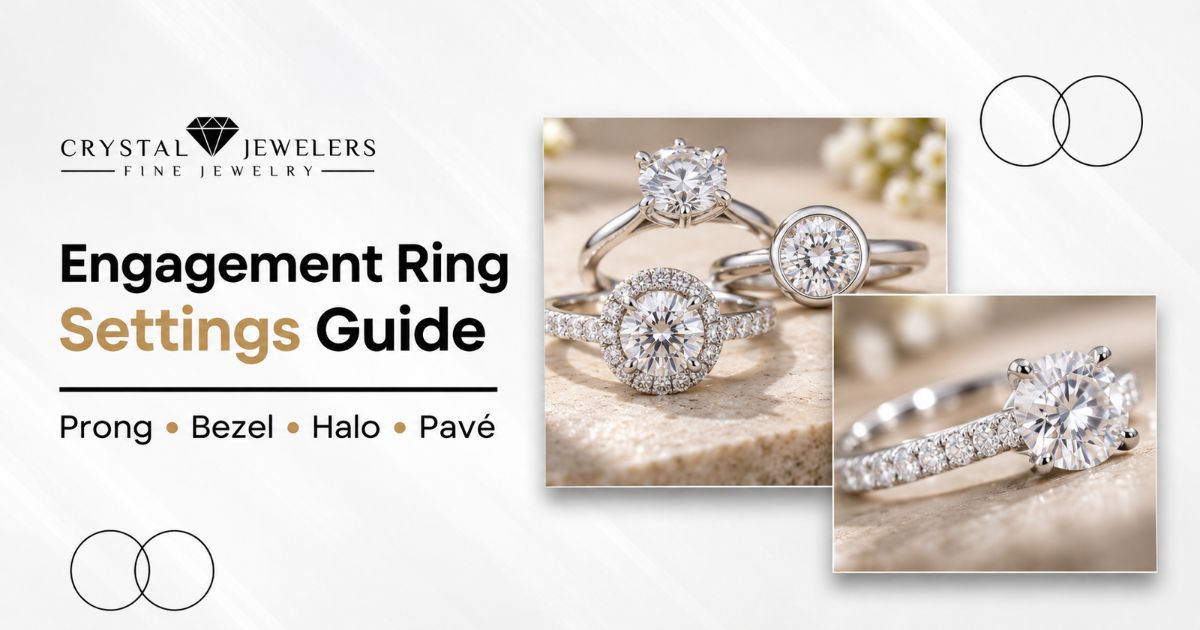
The setting is the part of a ring that holds the diamond in place. A prong setting shows the most sparkle, a bezel setting gives the most protection, and a halo setting makes the center stone look bigger. The best choice depends on how you live, what you do with your hands, and what style you love.
Two rings can have the exact same diamond and look totally different. That is because of the setting. In this guide, you will learn about each setting in plain words. You will see how each one looks, how safe it is, how much care it needs, and who it fits best.
Quick Answer: Which Engagement Ring Setting Is Best?
Here is a short chart to start.
| Setting | Sparkle | Protection | Everyday wear | Best for |
| Prong (solitaire) | Very high | Good | Good | A classic look |
| Bezel | Medium | Very high | Excellent | Active hands |
| Halo | Very high | Good | Good | A bigger look |
| Pave | High | Good | Good | Extra sparkle on the band |
| Channel | Medium | Very high | Excellent | Sleek, low rings |
| Cathedral | High | Good | Good | Height and drama |
| Three-stone | High | Good | Good | A meaningful design |
If you want one simple rule, use this: pick prong for the most sparkle, and pick bezel for the most safety.
What Is an Engagement Ring Setting?
A setting is the metal frame that holds your diamond. It also shapes how the ring looks from the top and the side. The setting affects:
- how much light enters the diamond
- how safe the diamond is
- how the ring feels on your hand
- how much care the ring needs
- how big the diamond appears
The setting is different from the diamond’s shape. A round diamond and an oval diamond can both be in a prong setting. If you need help with shapes, see our diamond shape guide.
Prong Setting: The Classic Choice
A prong setting uses small metal claws to hold the diamond. Most rings have four or six prongs. The prongs lift the diamond up, so light can enter from many sides. That is why a prong setting makes a diamond look so bright.
Why people love it:
- It shows off the diamond.
- It looks classic and timeless.
- It works with almost every diamond shape.
- It is easy to clean, because dirt has room to wash out.
Things to think about:
- Prongs can catch on clothes, sweaters, or hair.
- Prongs can wear down over time. Have them checked once a year.
- A raised diamond can get hit more easily than a low one.
A prong ring with just one diamond is often called a solitaire. You can see this style in our solitaire collection.
4 Prong vs 6 Prong
4 prongs show more of the diamond and let in more light. The diamond looks bigger from the top.
6 prongs hold the diamond a little more safely. If one prong gets bent, the other five still hold the stone. Six prongs also look a bit more round on a round diamond.
If you are tough on your hands, think about 6 prongs. If you want the diamond to take center stage, 4 prongs is a nice pick.
Bezel Setting: Smooth and Safe
A bezel setting wraps a thin rim of metal around the diamond. It can circle the whole stone (a full bezel), or just part of it (a partial bezel). The rim holds the diamond tightly, so there are no claws to snag.
Why people love it:
- It is one of the safest settings.
- It sits low and smooth, so it won’t catch on clothes.
- It has a clean, modern look.
- It is great for nurses, teachers, parents, and anyone who uses their hands all day.
Things to think about:
- The metal covers part of the diamond, so a little less light gets in.
- A bezel can make the diamond look a bit smaller from the top.
- Dirt can build up under the rim. Clean it often.
Halo Setting: A Bigger, Brighter Look
A halo setting puts a ring of small diamonds around the center stone. The small stones add sparkle, and they make the center diamond look larger. A halo can be round, square, or shaped like the center stone.
Why people love it:
- It adds sparkle from every side.
- It makes a smaller diamond look bigger.
- It looks glamorous.
- It can help hide small flaws in the main stone, because the eye goes to the glow.
Things to think about:
- More small stones means more cleaning.
- Small stones can sometimes come loose, so have your ring checked.
- It may be harder to resize.
Hidden Halo
A hidden halo puts the ring of small diamonds under the center stone, so you see the sparkle from the side. It is a quiet way to add shine.
Pave Setting: A Band Full of Sparkle
The word pave comes from a French word that means to pave, like a stone road. In a pave setting, many tiny diamonds sit close together on the band. They are held by small beads of metal. The ring looks like it is covered in sparkle.
Why people love it:
- It adds shine without adding a big stone.
- It makes the center diamond stand out.
- It looks rich and detailed.
Things to think about:
- The tiny stones can loosen over time.
- Resizing can be harder.
- It needs more careful cleaning.
You can learn more about pave bands in our bridal rings post.
Channel Setting: Sleek and Strong
In a channel setting, small diamonds sit side by side in a groove, with metal walls on each side. There are no prongs, so nothing sticks out.
Why people love it:
- It is smooth and snag-free.
- The stones are protected on the sides.
- It is great for wedding bands you wear every day.
Things to think about:
- It gives a bit less sparkle than prongs.
- It can be hard to resize.
- Dirt can collect in the groove.
Cathedral Setting: Height and Drama
A cathedral setting uses arches of metal that rise up to hold the diamond, like the arches inside a church. It lifts the center stone, so the ring looks tall and elegant. It can be a prong or a bezel style.
Why people love it:
- It gives the ring height and style.
- The arches add strength.
- It looks great from the side.
Things to think about:
- A tall ring may catch on gloves and sleeves.
- It can be harder to pair with some wedding bands.
Three-Stone Setting: A Story in a Ring
A three-stone ring has a center diamond and two side stones. Many people say the three stones stand for the past, the present, and the future. It looks full and balanced.
Why people love it:
- It has a meaningful story.
- It looks bigger than a single stone.
- It lets you mix stones and colors.
Things to think about:
- It has more parts to clean.
- The side stones need to be checked from time to time.
Other Settings Worth Knowing
Tension setting. The diamond looks like it floats between two ends of the band. It is modern and bold, but it is harder to resize.
Split shank. The band splits into two strands near the diamond. It adds shine and a unique look.
Toi et moi. Two stones sit side by side on one ring. It is a trendy look, and you can read about it in our toi et moi ring guide.
Cluster. Many small stones are grouped to look like one bigger stone.
Match the Setting to Your Diamond Shape
The setting and the shape work as a team. Here are some easy pairings.
- Round: Works in almost every setting. Prong and halo are very popular.
- Oval, pear, and marquise: Pointed ends need protection. Use prongs on the tips. Read our pear shaped ring guide and marquise ring guide.
- Princess and emerald: Corners can chip, so a bezel or corner prongs help protect them.
- Cushion: Looks lovely in halo and prong settings.
Match the Setting to Your Lifestyle
Think about what you do all day. This helps you choose a setting that you will love for years.
If you work with your hands (nurse, chef, mechanic, gardener, gym lover), pick a bezel or channel setting. They sit low and protect the diamond.
If you work in an office or have a lighter day, a prong or cathedral setting is a great fit and shows off the sparkle.
If you love bold style, a halo, three-stone, or pave ring will turn heads.
If you want something simple, a prong solitaire never goes out of style.
If you plan to stack rings, choose a low setting so the bands sit flat. Take a look at our stackable ring collection.
Which Setting Is Best for a Small Diamond?
A halo is a smart pick for a smaller center stone, because the ring of small diamonds makes the whole ring look bigger. A pave band also adds shine. A bezel can make a small stone look neat and bold. If you want to stay on budget, our guides on diamond rings under $5,000 and engagement rings under $800 can help.
Which Setting Is Best for a Large Diamond?
A big stone needs a strong setting. A 6 prong, bezel, or cathedral setting can hold a larger stone safely. If you are thinking big, read about the 5 carat diamond ring.
Does the Setting Change the Price?
Yes, it can. A halo or pave ring uses more small diamonds and takes more work, so it can cost more. A simple prong solitaire may cost less. The metal you pick matters too. White gold, yellow gold, rose gold, and platinum all have different prices. If you love the cool look of white gold, here are top reasons to choose a white gold ring.
The type of diamond matters as well. Lab-grown diamonds often cost less than natural ones for the same size. Learn more in our guide to lab grown vs natural diamonds, and see how reports work in GIA vs IGI diamond certification.
How to Care for Your Setting
A good setting lasts for years if you care for it.
- Check your prongs once a year. A jeweler can look for loose or worn prongs.
- Clean your ring often. Follow our steps in how to clean a diamond ring at home.
- Take it off for heavy work. Remove it for gym, gardening, and cleaning.
- Insure your ring. Read about jewelry appraisal for insurance.
- Keep it away from harsh chemicals. Pool water and cleaners can dull metal over time.
Common Mistakes When Choosing a Setting
Picking only by looks. A beautiful ring that snags every day is not fun to wear.
Ignoring your hands. Small hands may look better with a lower ring. Larger hands can carry a bolder one.
Forgetting the wedding band. Some settings sit high and leave a gap with a plain band. Try the two together before you buy. Learn more in customizing your bridal ring set.
Skipping the try-on. Photos can look different in person. Always try a few styles.
See Settings in Person in Greensboro
The best way to choose is to try rings on. At Crystal Jewelers in Greensboro, NC, you can compare prong, bezel, halo, and more side by side. Browse our engagement rings or view our rings page to get ideas first. Then book an engagement and wedding jewelry appointment, or set up a custom jewelry appointment if you want a ring made just for you. Need help with the cost? See our jewelry financing options.
Engagement Ring Settings FAQs
The prong solitaire is the most popular setting. It shows off the diamond and fits almost any shape. Halo rings are a close second.
A bezel setting is one of the safest, because metal wraps around the diamond. Channel settings are also very safe. A 6 prong setting is a safe pick if you want more sparkle.
Prong and halo settings give the most sparkle. Prongs let light enter from many sides, and a halo adds many small diamonds.
Bezel and channel settings are best for hard daily use. Low prong settings also work well. Think about your job and hobbies.
A little, yes. The metal rim covers part of the diamond, so slightly less light gets in. Many people still love the clean look and the safety.
A halo setting makes the center stone look bigger, because the ring of small diamonds adds to its size. A thin band and a pave band can also help.
The Bottom Line
There is no one best setting. A prong setting gives the most sparkle, a bezel setting gives the most safety, and a halo gives the biggest look. Think about your hands, your daily life, and your style, then try a few on. When you love how it looks and feels, you have found your setting.
Ready to see them side by side? Visit Crystal Jewelers in Greensboro and our team will help you find the setting that fits your story.