

Automatic vs Quartz vs Mechanical Watches: Which Should You Buy?

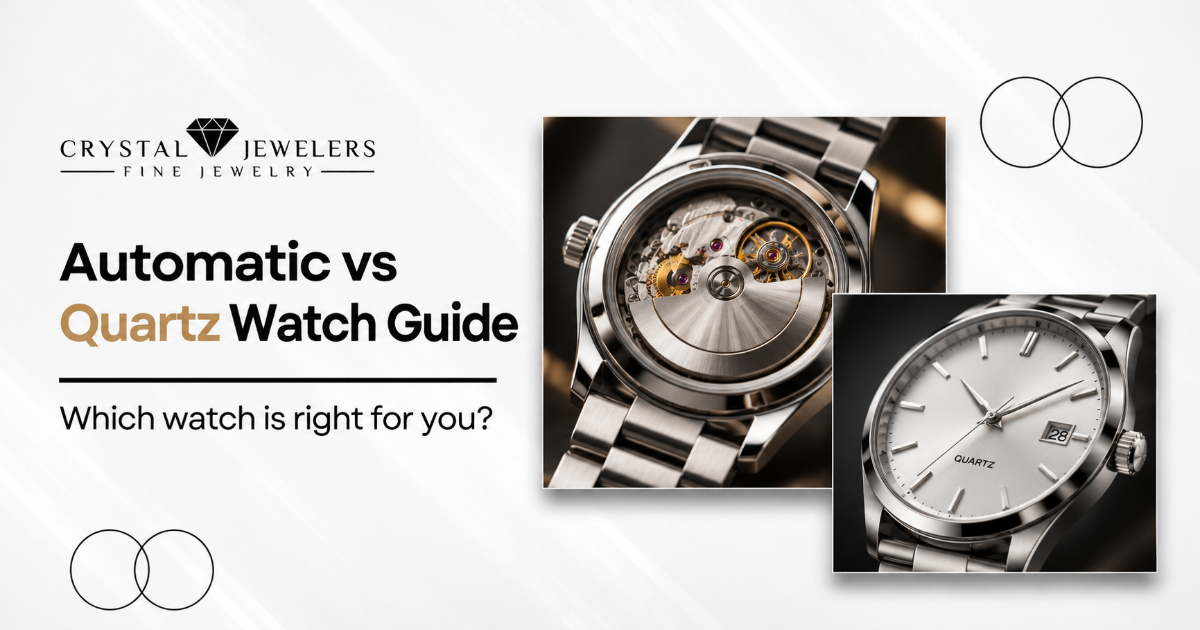
A quartz watch runs on a battery and is very accurate, low-cost, and easy to care for. An automatic watch has no battery and winds itself from the motion of your wrist. It costs more and needs servicing every few years, but many people love its craft and its smooth moving hands. Neither one is better in every way. The best watch is the one that fits your life.
If you are shopping for a watch, you have probably seen the words quartz, automatic, and mechanical. They can sound confusing. This guide explains each one in plain words, compares them side by side, and helps you choose.
Quick Comparison Chart
| Feature | Quartz | Automatic | Mechanical (hand-wound) |
| Power source | Battery | Wrist motion | Winding the crown by hand |
| Accuracy | Very high | Good | Good |
| Price | Lower | Medium to high | Medium to high |
| Upkeep | Battery change every few years | Service every few years | Service every few years |
| Second hand | Ticks once a second | Sweeps smoothly | Sweeps smoothly |
| Best for | Everyday ease | Watch lovers | Collectors |
Use this chart as your quick guide, then read on for the details.
What Is a Quartz Watch?
A quartz watch uses a small battery to send power through a tiny quartz crystal. The crystal shakes at a steady speed. A small chip counts the shakes and moves the hands. Because the crystal is so steady, quartz watches keep very good time.
What you will notice:
- The second hand ticks once each second.
- The watch is usually lighter and thinner.
- You never need to wind it.
- It costs less to make, so it costs less to buy.
Pros of quartz:
- Very accurate.
- Affordable.
- Low upkeep.
- Strong against bumps and daily use.
- Easy to repair.
Cons of quartz:
- The battery needs to be changed.
- Less craft and detail inside.
- Some people feel it is less special than a mechanical watch.
If you are curious about battery changes, read our guide on watch battery replacement cost in Greensboro.
What About Solar Quartz?
Some quartz watches use light instead of a normal battery. Citizen Eco-Drive is a well-known example. It charges from sunlight or room light, so you rarely need to change a battery. You can browse styles in our Citizen Eco-Drive collection.
What Is a Mechanical Watch?
A mechanical watch has no battery. Inside, a coiled spring called a mainspring stores energy. As the spring unwinds, it moves tiny gears that turn the hands. Hundreds of small parts work together, and many are made and put together with great care.
There are two kinds of mechanical watches:
- Hand-wound (manual): You turn the crown by hand each day or two to wind the spring.
- Automatic (self-winding): The watch winds itself as you move.
So here is the key idea: every automatic watch is a mechanical watch, but not every mechanical watch is automatic.
What Is an Automatic Watch?
An automatic watch is a mechanical watch with a small weight inside called a rotor. When you move your wrist, the rotor spins and winds the mainspring for you. You do not need a battery, and you do not need to wind it every day, as long as you wear it.
What you will notice:
- The second hand sweeps in a smooth glide.
- The watch feels a bit heavier.
- If you take it off for a couple of days, it may stop. You set the time and wind it a few turns to start it up again.
- Many have a clear back, so you can see the gears move.
Pros of automatic:
- No battery needed.
- Fine craftsmanship.
- A smooth sweeping second hand.
- Can last for decades with good care.
- Often keeps or holds value better, especially well-known brands.
Cons of automatic:
- Costs more than a similar quartz.
- Less accurate than quartz. It can gain or lose a few seconds a day.
- Needs servicing every few years.
- Can stop if you do not wear it.
- More sensitive to hard knocks and strong magnets.
Automatic vs Mechanical: What Is the Difference?
This is one of the most common questions. Here is the simple answer.
- A mechanical watch is any watch powered by a spring, with no battery.
- An automatic watch is a mechanical watch that winds itself.
- A manual or hand-wound watch is a mechanical watch you wind with the crown.
Think of it like cars. All cars have engines, but some are automatic and some are manual. The engine type is the same. The way you run it is different.
Accuracy: Which Keeps Better Time?
Quartz wins on accuracy. A good quartz watch may be off by only a few seconds each month. An automatic watch may be off by a few seconds each day. For most people, that is still fine. You might set the time every week or two.
If perfect timing matters to you, like for work, sports, or travel, a quartz watch is the safer pick. If you enjoy the feel of a mechanical watch, a small gap in time is part of the charm.
Cost: Which Is Cheaper?
Quartz watches usually cost less. Automatic watches have more parts and take more skill to build, so they cost more. A simple quartz watch can be very low in price. An automatic can start higher and go up into the thousands for luxury brands.
Do not forget upkeep. A quartz watch needs a new battery every few years, and that is a small cost. An automatic watch needs a full service every few years, and that costs more. Think about the cost over time, not just the price tag. If you want help with budget, see our jewelry financing page.
Upkeep: Which Is Easier to Own?
Quartz: Change the battery when it stops. That is about it. Keep it dry and clean.
Automatic: Wear it often, or use a watch winder if you own more than one. Have it serviced every few years. A jeweler cleans the parts, adds fresh oil, and checks the timing.
If you want a grab-and-go watch with no fuss, choose quartz. If you enjoy caring for something special, you may love an automatic.
Need help with either one? Our jewelry and watch repair team can help.
Durability: Which Lasts Longer?
Both can last a long time. Quartz watches handle daily knocks well because they have fewer moving parts. Automatic watches can last for decades, and some pass from parent to child, but they need regular care. A well-kept automatic can outlast many quartz watches, while a quartz watch is more forgiving if you forget to care for it.
Which Is Better for Everyday Wear?
It depends on your day.
- If you work with your hands, exercise a lot, or travel often, a tough quartz watch is a smart pick.
- If you work in an office and like fine details, an automatic suits you well.
- If you wear a watch only on weekends, quartz will be ready when you are. An automatic may have stopped.
- If you wear it every day, an automatic stays wound with no effort.
Which Is Better as a Gift?
A quartz watch is a great gift for teens, first jobs, and busy people. An automatic watch is a great gift for milestones, like a graduation, a promotion, or an anniversary. See more in our anniversary gift guide and jewelry gift ideas.
Are Automatic Watches Worth It?
For many people, yes. An automatic watch is worth it if you love how it is made, enjoy the smooth sweep of the hands, and plan to keep it for years. It is not worth it if you only want to know the time. A simple quartz watch can do that very well for less money.
It comes down to what matters to you. Some people want precision and low cost. Others want craft and story. Both are good reasons.
Does a Quartz Watch Mean Lower Quality?
No. Quartz is not a cheap or poor way to make a watch. Quartz watches are more accurate than most mechanical ones, and a well-made quartz watch can look and feel great. The big difference is the kind of engine inside, not the quality of the whole watch.
Brands like Citizen and Seiko make both quartz and automatic watches. You can browse our watches page, including Seiko and Invicta, to see different styles.
Luxury Watches and Movement Type
Many high-end watches are automatic or hand-wound. Some luxury brands also make quartz models. If you are thinking about a luxury watch, learn about popular names in our luxury watch brands guide. If you are thinking about buying used, read how to buy a pre-owned Rolex safely and see our pre-owned Rolex page. For a one-on-one visit, you can book a luxury watch consultation.
If you buy a higher-priced watch, it is smart to insure it. Learn how in our post on jewelry appraisal for insurance.
Simple Test: Which Watch Should You Choose?
Answer these questions to find your match.
- Do you want the lowest cost and least care? Choose quartz.
- Do you love gears, craft, and watch history? Choose automatic.
- Do you want the most accurate time? Choose quartz.
- Do you like a smooth, sweeping second hand? Choose automatic.
- Do you take your watch off for days at a time? Choose quartz.
- Do you want a watch to keep for decades and maybe pass down? Choose automatic.
- Do you want no batteries at all? Choose automatic, or a solar quartz.
If you got mostly quartz answers, go with quartz. If you got mostly automatic answers, go with an automatic. If it is close, try both on.
How to Tell If a Watch Is Quartz or Automatic
You can often tell by looking.
- Second hand: A tick each second means quartz. A smooth sweep means mechanical or automatic.
- Case back: A clear back that shows gears usually means mechanical.
- Text on the dial or back: Look for words like “Automatic,” “Quartz,” or “Battery.”
- Weight: Mechanical watches often feel a bit heavier.
- Listen: Hold it close to your ear. A mechanical watch has a soft, fast ticking sound.
If you are still not sure, ask a jeweler. We are happy to help you tell the difference.
Tips to Care for Your Watch
Whichever one you choose, a little care goes a long way.
- Keep it dry unless it is made for water. Check the water rating.
- Avoid strong magnets, like speakers and some phone cases.
- Do not wear it during heavy hits, like hammering or lifting weights.
- Wipe it clean with a soft cloth.
- Store it somewhere cool and dry.
- Follow your service schedule.
Shop Watches in Greensboro
Reading about watches is helpful, but trying them on is better. At Crystal Jewelers in Greensboro, NC, you can compare quartz and automatic styles on your own wrist. Visit our time pieces page to see what we have, or contact us with any questions. Our team can tell you how each watch works and help you choose.
Automatic vs Quartz Watch FAQs
A quartz watch runs on a battery and a quartz crystal. An automatic watch has no battery, and it winds itself from the motion of your wrist.
Quartz is more accurate. A quartz watch may be off by seconds per month, while an automatic may be off by seconds per day.
No. Automatic watches run on a spring that is wound by your wrist motion. Some automatic watches may use a tiny battery for extra features, but the main movement does not need one.
An automatic watch is a type of mechanical watch. A mechanical watch can also be hand-wound, where you turn the crown to wind it.
Most automatic watches should be serviced every few years. A jeweler or watchmaker cleans the parts, oils them, and checks the timing. Ask your watch maker for the best schedule for your model.
Usually, yes. Quartz watches have fewer parts and are easier to make, so they often cost less than automatic watches.
The Bottom Line
Quartz gives you accuracy, low cost, and easy care. Automatic gives you craft, a smooth sweeping second hand, and no battery. Neither one wins every time. Think about your budget, your daily life, and what you love, then try them on. When a watch feels like you, that is the right one.
Visit Crystal Jewelers in Greensboro and let our team help you find a watch you will enjoy for years.